
Delivering Nature Positive outcomes through landscape conservation: Credible action and shared responsibility in the mining sector
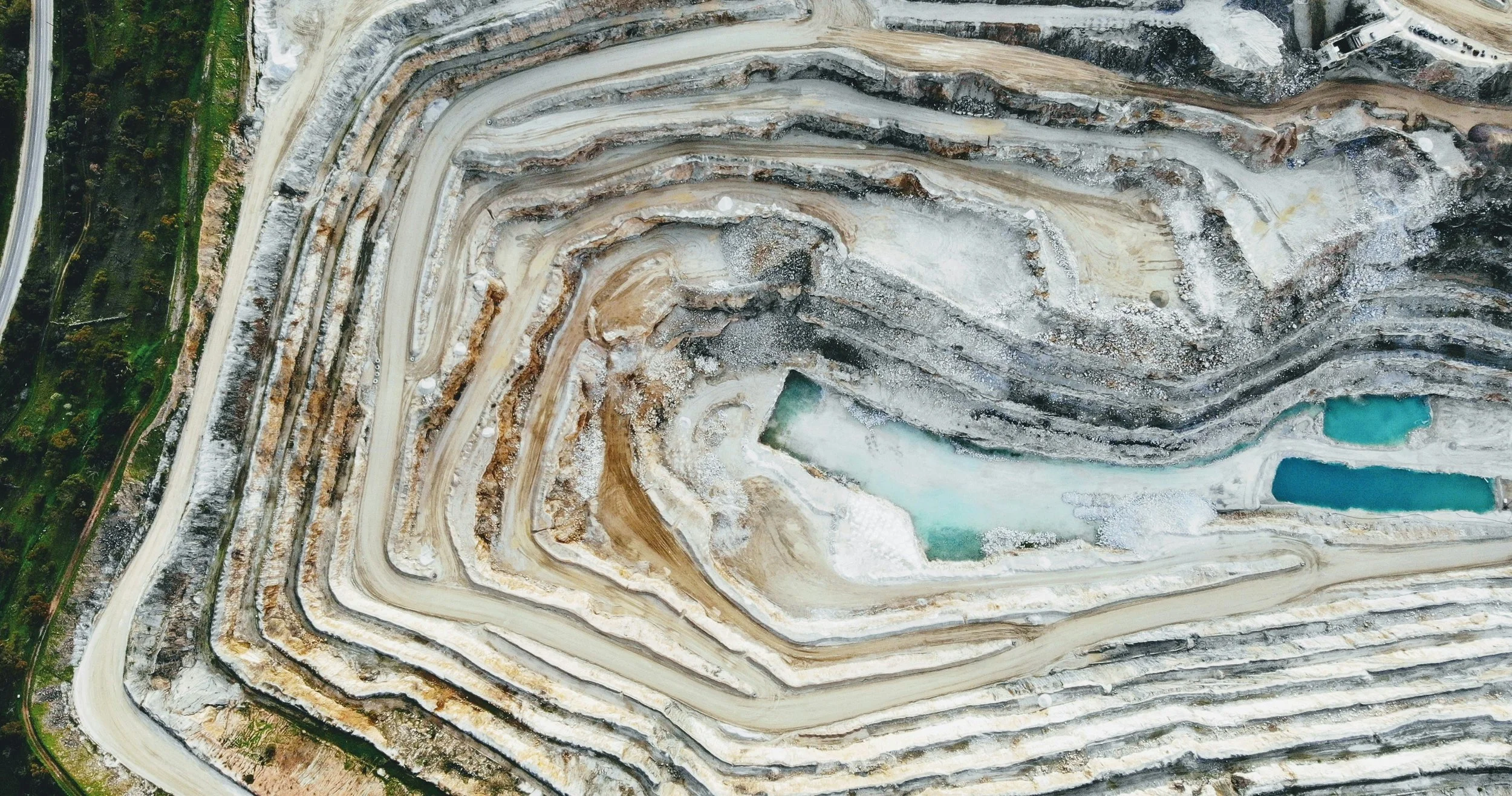
Drone over quarry in Barossa Valley, SA, Australia. Image by Dion Beetson
The mining sector has made real progress on managing its impacts at the site level. But nature doesn't stop at the fence line — and neither can the industry's ambitions for nature recovery.
A growing consensus is emerging across mining companies, regulators, and civil society: meaningful progress toward nature-positive outcomes requires action at the landscape scale. Industry bodies are starting to reflect this. The ICMM's nature position statement, for example, now includes commitments to identify and address "shared landscape-scale material risks and opportunities" — a signal that the sector understands the direction of travel.
NPLI has been working to turn that direction of travel into a practical pathway. Together with The Biodiversity Consultancy we have produced a paper examining what credible landscape-scale conservation action looks like for mining companies — and what still needs to be put in place to enable it.
Why landscape scale matters
The business case is clear. Mining operations often depend directly on healthy ecological conditions beyond their site boundaries — stable hydrological systems, seed supply for rehabilitation, and functioning ecosystems that underpin local livelihoods and social licence. At the same time, societal and regulatory expectations around what it means to be nature positive have moved beyond site-level impact management. Reputational and regulatory risks are increasingly tied to landscape-level outcomes.
Landscape-scale action also offers something that site-level activity alone cannot: the potential to address the underlying drivers of biodiversity loss in a region, rather than simply managing a local footprint.
What does credible landscape action look like?
A central question companies face is what actually qualifies as landscape-level conservation — and what doesn't. Our paper is clear on this: landscape action is not a rebranding of existing offset or compensation measures. It must go beyond site-level commitments and deliver measurable, evidence-based benefits that are responsive to new information as it emerges.
Our paper with TBC recommends:
· Actions should go beyond existing site-level commitments (including commitments to rehabilitate the site). Landscape actions are not a ‘rebranding’ of impact compensation measures, such as the use of offsets.
· They should deliver measurable benefits, grounded in evidence and responsive to updated information about their performance. These actions need to be aligned with landscape-scale conservation priorities — and, where feasible, with global goals such as the Global Biodiversity Framework's target to restore 30% of degraded ecosystems by 2030.
In some cases, companies may pursue opportunity-driven investments, such as supporting the creation or expansion of protected areas, that directly improve the state of nature in the wider landscape.
Making outcomes credible and attributable
For landscape-scale action to be credible — and for companies to be able to stand behind the claims they make — three elements need to be in place.
The first is a well-defined landscape boundary, drawn in line with the scale of key ecological processes and pressures rather than operational convenience. The second is robust, agreed priorities and targets, such as those anchored to National Biodiversity Strategies and Action plans. The third — and perhaps the most complex — is clearly defined responsibility: who is contributing to what, and how outcomes are shared among the many actors operating within a landscape.
In mining landscapes, that typically means mining companies working alongside governments, land managers, civil society, financiers, and downstream buyers. Collaboration is not optional — it is the foundation on which credible landscape action is built, and it needs to start early.
The barriers that still need to be addressed
Despite the clear direction of travel, many companies remain hesitant to act — and understandably so. The guidance needed to take credible landscape action simply isn't fully in place yet.
In our paper with The Biodiversity Consultancy we have set out an agenda to put in place the guidance needed for mining companies, and other sectors with significant impacts on biodiversity, to take landscape-scale conservation action. Guidance is needed to:
· Translate global biodiversity goals into landscape-scale actions. Differing ecological conditions and pressures on landscapes makes this challenging. Data constraints create further complexity. There is a need for clearer ways to translate and compare contributions across actors and sectors, to enable corporate landscape action to be aggregated as contributions towards the GBF.
· Agree principles for making claims regarding landscape outcomes. Large numbers of actors are responsible for outcomes at the landscape level. Clear distinctions need to be made regarding participation, action, and outcomes. There is a need for better methods to link observed landscape change to specific actions and actors.
· Advance monitoring systems. To demonstrate positive outcomes at landscape scale, monitoring systems should be sensitive to change, fit for context, and supported by governance arrangements for data sharing. There is currently limited consensus on which indicators and institutional arrangements are most appropriate for tracking landscape-level change.
· Establish appropriate governance arrangements. Landscape initiatives often involve multiple actors, including financiers and downstream consumers, and may operate in land- or seascapes companies do not directly control. More work is needed to develop effective governance models for these complex collaborative processes.
What comes next
In 2026, NPLI and its partners are advancing landscape-level conservation for the mining sector through two key efforts.
First, coordinated pilot projects will test conservation frameworks in practice, providing real-world lessons and helping shape future guidance.
Second, ongoing scientific and policy work will develop the methods, standards, and regulations needed to make landscape-scale action credible and measurable.
NPLI is committed to bridging the gap between ambition and measurable outcomes, ensuring companies move from commitment to action in 2026.
Get in touch with the NPLI team to find out more.